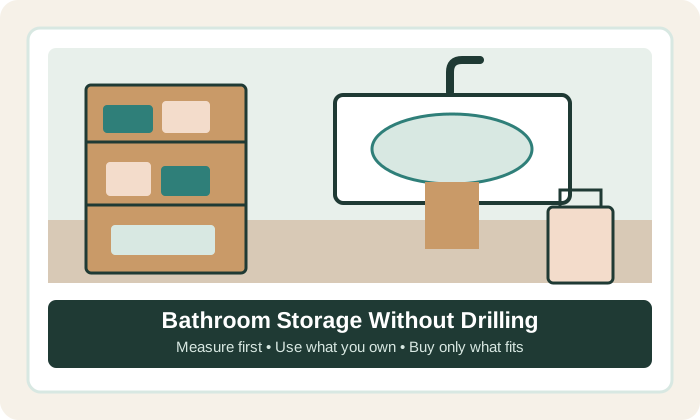
Renting can make bathroom storage frustrating: drilling may be prohibited, adhesive hooks may not suit the wall, and a freestanding cabinet can swallow the little floor space you have. The answer is not to buy a stack of organizers and hope they fit. It is to match each storage choice to a specific clutter problem, the room’s measurements, and the rules of your rental.
This guide gives you a no-drill plan that works with a tiny vanity, a pedestal sink, limited counter space, or a shower with nowhere to put bottles. Start with what you already own; buy only the pieces that solve a measured problem.
Affiliate disclosure: This article contains an affiliate link. If you buy through it, Home Organization Ideas may earn a commission at no extra cost to you. The link is an optional place to compare bathroom products, not a requirement to complete the organization plan.
1. Identify the actual bottleneck before shopping
Spend five minutes observing how the bathroom is used. Which items are left out because there is no convenient home? Which items fall over, get wet, or disappear at the back of a cabinet? Is the problem daily toiletries, towels, cleaning supplies, or backup products?
Make four groups:
- Daily-use items: products used most days.
- Occasional items: travel products, special treatments, and guest supplies.
- Backups: unopened replacements.
- Items that do not belong here: duplicates, products used elsewhere, and things you no longer need.
Keep the first group easiest to reach. Store occasional items and backups in secondary locations, and move the last group out. Dispose of expired products according to their labels and local guidance. This first step often creates usable space without a purchase.
2. Measure the space a storage product must occupy
Do not measure only the room or the cabinet’s outside. Measure the exact place where the item will sit.
For a vanity or cabinet, record:
- Clear width between the sides and plumbing.
- Usable depth with the door closed.
- Height below pipes, shelves, or the basin.
- Door opening and hinge clearance.
- Space needed to remove the bin without unloading it.
For an over-door organizer, check door thickness, the gap above the door, handle position, and whether it prevents the door from closing. For a freestanding shelf, tape its footprint on the floor and test whether the door, drawers, and normal walking route remain clear.
Write the measurements in your phone before shopping. A product photo cannot tell you whether the product fits your particular bathroom.
3. Start with storage that needs no installation
Choose the least permanent option that solves the problem.
- A washable tray groups daily products on the counter and makes wiping around them easier.
- Drawer dividers stop small items from sliding into a mixed pile.
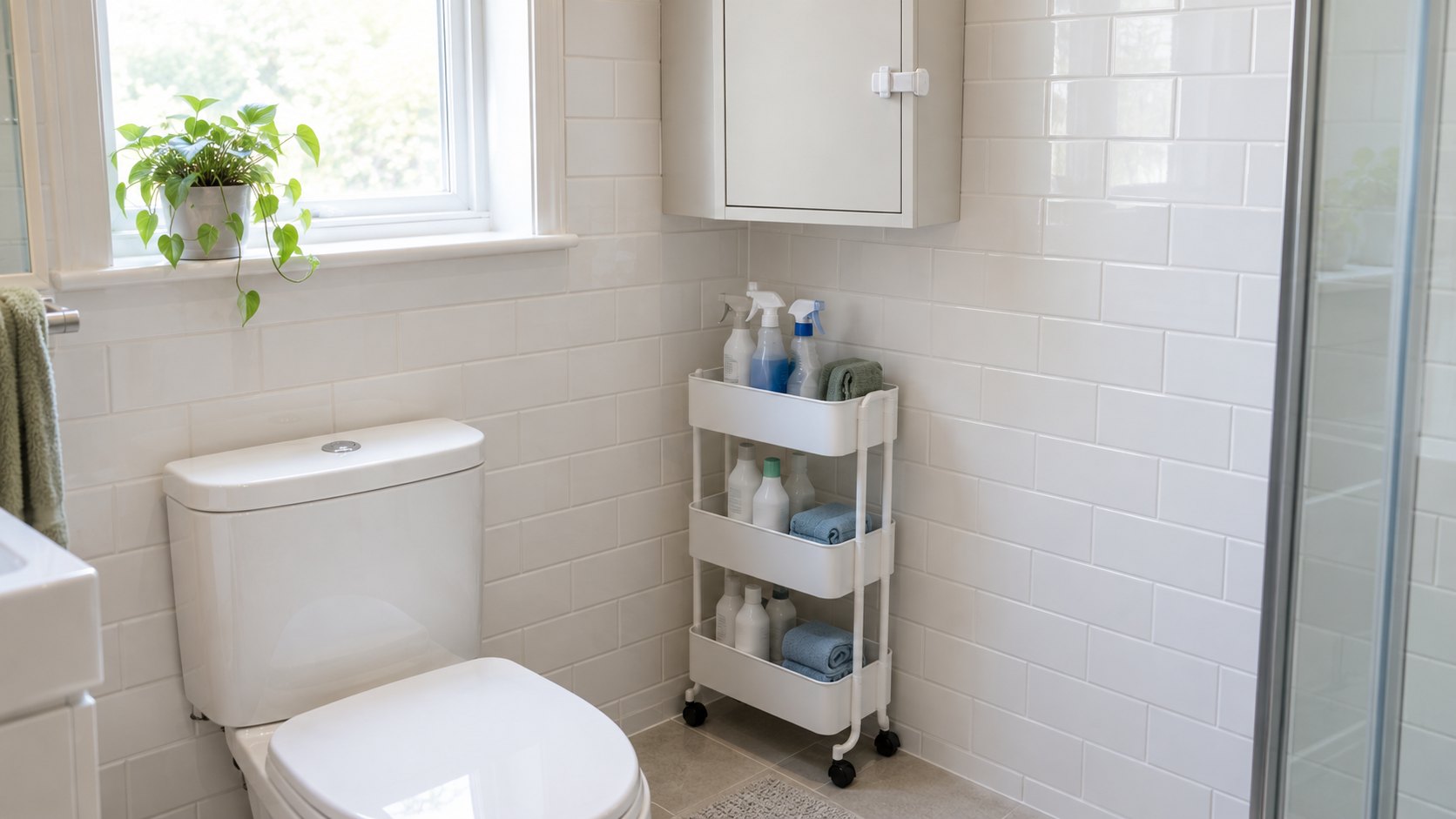
- A narrow freestanding rack can add storage beside a vanity if it does not block the route through the room.
- An over-door organizer can hold light, suitable items when the door and organizer are compatible.
- A lidded or open bin can group backups under the sink, provided it fits around the plumbing.
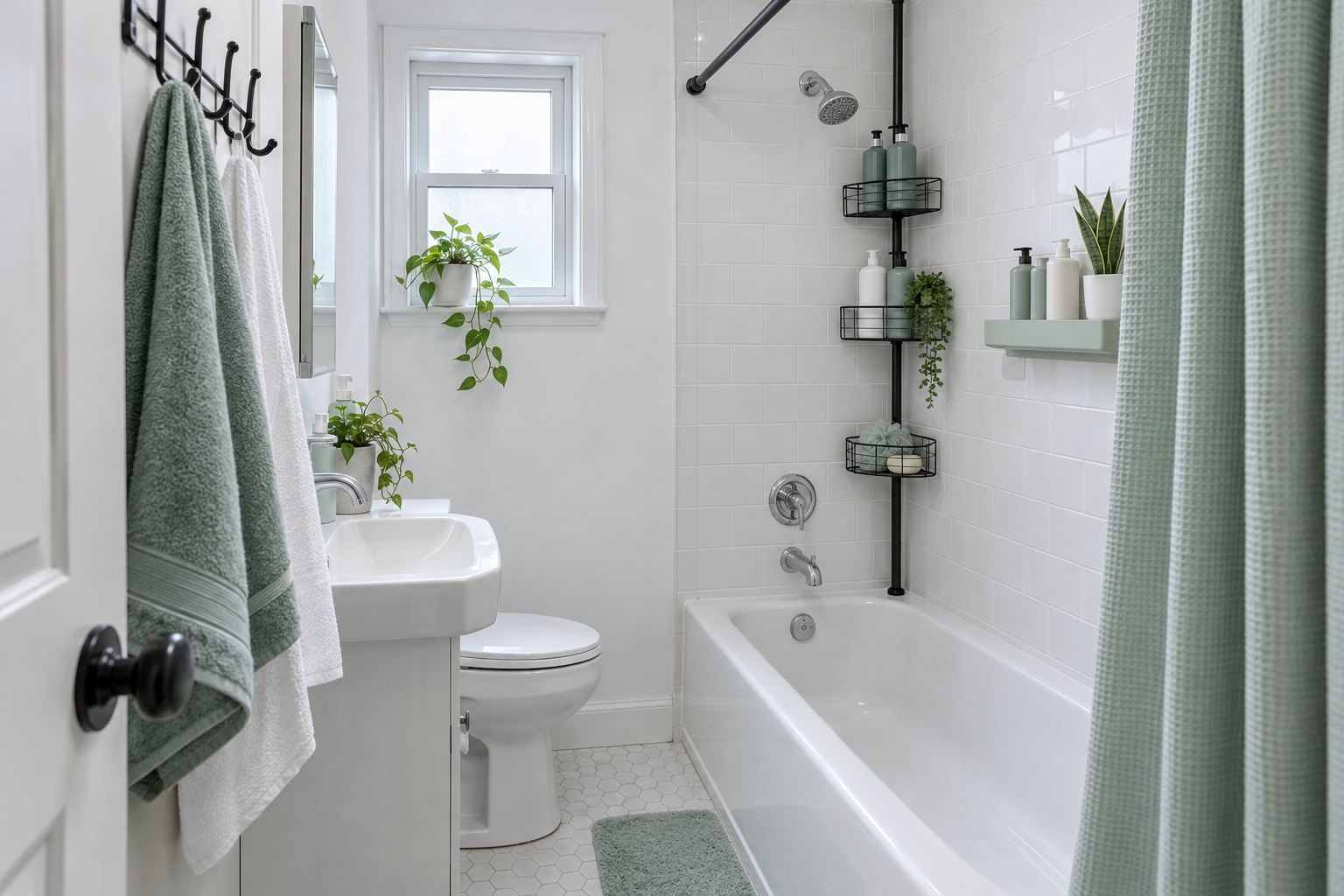
- A shower caddy keeps currently used bottles together if it attaches securely and drains properly.
Reuse a clean box or container you already have while testing the layout. If the arrangement does not work for a week, adjust it before buying a matching set.
4. Treat adhesive storage as a surface-and-load decision
Adhesive hooks and shelves are not universal replacements for screws. Their performance depends on the product, surface material, surface condition, humidity, preparation, curing time, and load.
Before using one:
- Read the manufacturer’s compatibility and weight instructions.
- Clean and prepare the surface exactly as directed.
- Allow the specified curing time before loading it.
- Keep the load below the stated limit.
- Check it periodically, especially in a damp area.
Do not attach an adhesive shelf to a surface the manufacturer excludes, and do not use adhesive products to support heavy, sharp, breakable, or safety-critical objects above someone’s head. A freestanding solution is a better choice when the surface or load is uncertain. If you are unsure whether an installation is permitted, check your lease or ask the landlord before proceeding.
5. Organize under a pedestal sink or a crowded vanity
A pedestal sink offers little concealed storage, while a vanity cabinet often loses usable space around the drain. The solution differs by layout.
For a pedestal sink: keep only a small daily tray on the basin if it does not interfere with use. Consider a narrow freestanding unit or a basket stored elsewhere in the room, but check the footprint and stability before buying. Towels may fit better on an existing rail or a freestanding rack than in a cabinet that is too shallow.
For a vanity: use two small bins around the plumbing rather than one large bin that cannot slide out. Keep cleaning products separate from personal-care products, and do not force containers against pipes or valves. Leave access to shut-off valves and plumbing connections.
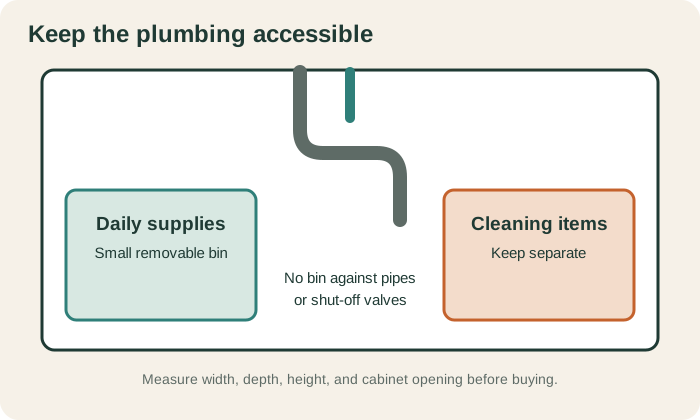
If children can reach the cabinet, secure cleaning products and medicines appropriately. The U.S. Consumer Product Safety Commission provides household childproofing guidance: Childproofing Your Home .
6. Give the shower a strict limit
Shower floors and narrow ledges become cluttered when every bottle stays in the wet area. Keep only the products currently in use inside the shower and store unopened backups somewhere dry.
Choose a caddy that fits without blocking controls, drains after use, can be cleaned, and stays secure with the actual products loaded. Do not overload a tension pole, hanging rack, or showerhead caddy beyond its instructions. If there is no suitable attachment point, keep the products in a basket outside the wet zone and bring them in when needed.
Avoid leaving bottles directly on the floor where they make cleaning harder or can become a trip hazard. A simple limit—one place for the products in use—makes the routine easier to maintain.
7. Use a three-zone system, not a pile of containers
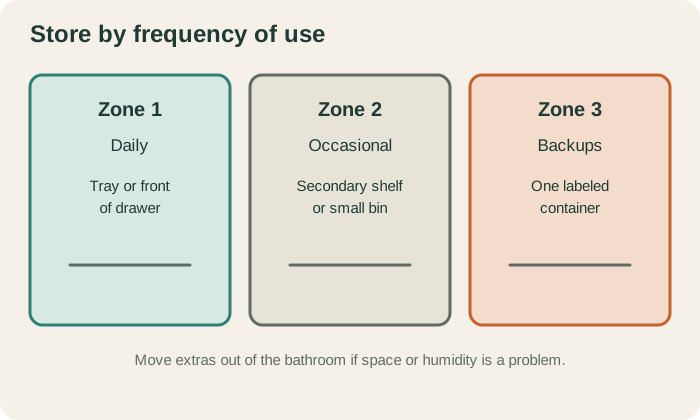
A bathroom is easier to maintain when every item has a zone:
- Zone A — daily: the front of a drawer, one tray, or one easy-to-reach shelf.
- Zone B — occasional: a secondary bin or higher shelf that remains reachable.
- Zone C — backups: one labeled container, ideally outside the bathroom if the room is humid or has no spare cabinet space.
Keep medicines according to their labels; the bathroom’s heat and humidity may not be suitable for some products. Store cleaning chemicals separately from toiletries and follow their labels.
8. Control moisture so storage does not become another problem
Bathrooms are damp environments. Wet towels, poorly drained caddies, and containers that trap moisture can lead to musty smells and make shelves harder to clean. The EPA advises drying wet or damp items and surfaces within 24 to 48 hours to prevent mold growth.
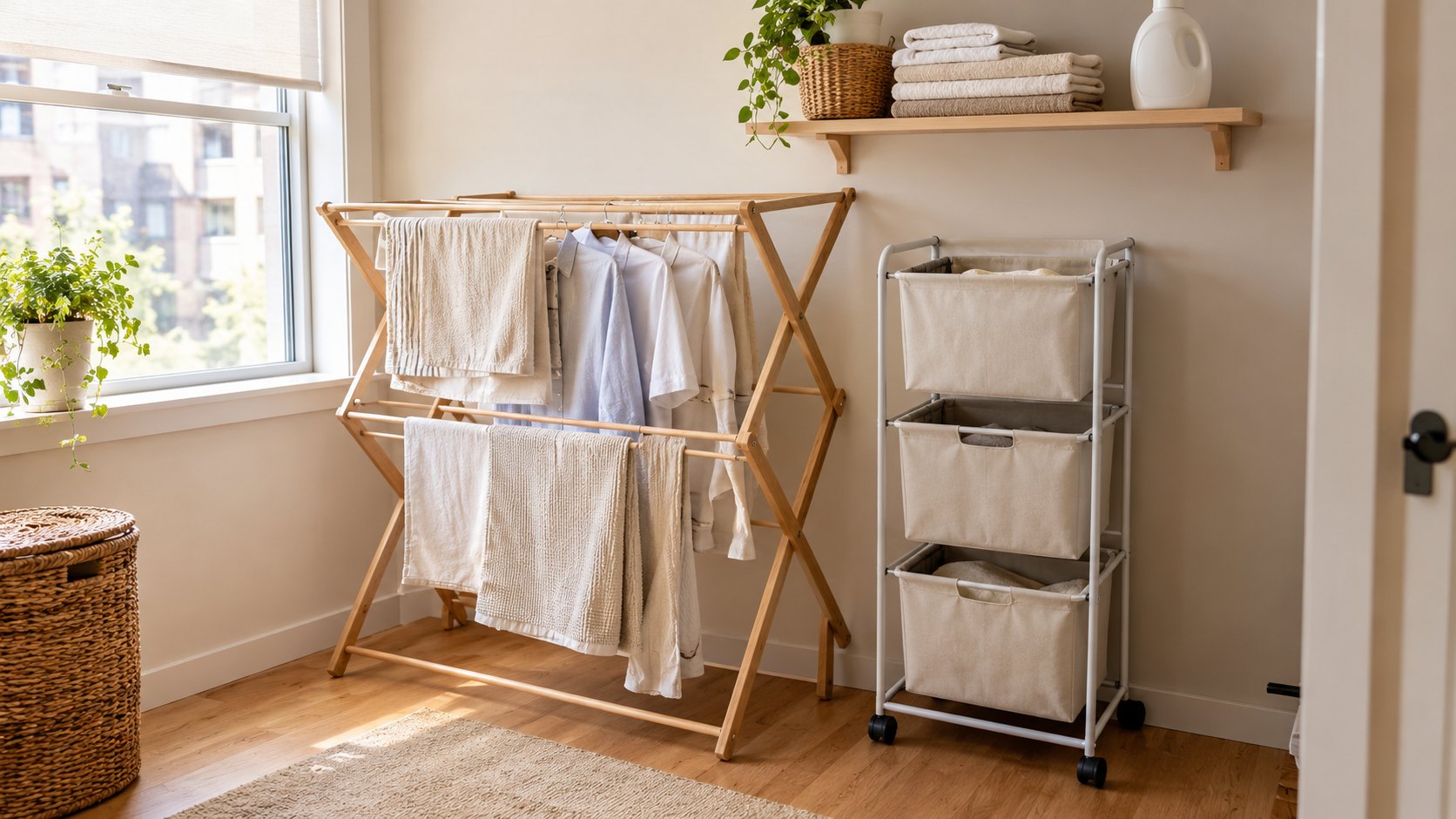
- Hang towels spread open so they can dry.
- Choose washable containers in areas that get splashed.
- Empty and clean caddies when residue builds up.
- Avoid storing cardboard or other moisture-sensitive materials in persistently damp spots.
- Use the bathroom exhaust fan if available and follow its instructions; report persistent leaks or ventilation problems to the landlord.
Do not hide damp items in closed bins. If a cabinet smells musty, remove its contents, identify the source of moisture, and allow the area to dry before reorganizing. Organization cannot compensate for a leak or ventilation defect.
9. Buy only after the layout passes a one-week test
Live with your temporary setup for several days. Notice what you reach for, what gets left out, and which container is awkward to remove. Then buy only the missing piece.
Use this decision table:
| What is going wrong? | First solution to test | Check before buying |
|---|---|---|
| Counter is crowded | One washable tray | Counter depth and sink use |
| Small items get lost | Drawer dividers | Interior drawer width and depth |
| Vanity bins hit pipes | Two narrow bins | Pipe clearance and cabinet opening |
| Door storage prevents closing | A different slim organizer or none | Door thickness, gap, handle and hinges |
| Shower bottles sit on the floor | A compatible caddy or outside basket | Secure fit, drainage and load instructions |
| Backups take over the cabinet | One labeled reserve bin | Whether backups can be stored elsewhere |
| No vanity storage exists | Narrow freestanding shelf | Footprint, stability and walking clearance |
Do not buy an entire matching collection just because it looks tidy online. The right organizer is the one that fits, is easy to clean, and makes the routine simpler.
10. Compare bathroom upgrades carefully
Sometimes organization cannot solve the underlying issue: a damaged fixture, a vanity with unusable storage, or a layout that does not work. Before considering a replacement, write down the problem that the new product must fix.
Check the manufacturer’s dimensions and installation requirements, plumbing positions, delivery charges, return conditions, warranty, and whether professional installation is needed. Include fittings, labor, tools, disposal, and possible repairs in the total cost. For plumbing, waterproofing, or electrical work beyond your skills, consult a qualified professional and get the landlord’s permission where required.
If a product upgrade is genuinely useful, you can compare options from Simple Project. This is an optional comparison link. Verify the current product specifications, price, availability, shipping, installation needs, and return terms before ordering. Do not assume every item is renter-friendly or suitable for a small bathroom.
Browse Simple Project bathroom products (affiliate link)
11. Maintain the system with a five-minute reset
At the end of the day, return daily products to their assigned spot, hang towels open, put shower products back in the caddy, and move laundry to its hamper. Once a week, check the backup bin before purchasing replacements.
When an item repeatedly gets left out, do not immediately add another organizer. Ask whether its assigned place is too far away, too difficult to reach, or already full. Fixing that friction is more likely to last than adding another container.
Frequently asked questions
How can I add bathroom storage in a rental without drilling?
Start with countertop trays, drawer dividers, freestanding racks, and compatible over-door storage. Use adhesive products only on approved surfaces and within the manufacturer’s instructions and load limits.
Do adhesive bathroom shelves work in humid rooms?
They can fail if the surface, humidity, preparation, curing time, or load is unsuitable. Follow the instructions and avoid placing heavy or breakable items where a fall could injure someone.
What is the best storage for a bathroom with no vanity?
Measure the available floor and door space, then consider a narrow freestanding shelf or over-door organizer that does not block the door, toilet, or walking route. A daily tray can contain small essentials.
Can I store cleaning products under the bathroom sink?
Only if they fit safely and can be kept separate from toiletries. Keep chemicals in original containers and secured away from children. Leave access to plumbing and shut-off valves.
How do I stop a small bathroom becoming cluttered again?
Give daily products one easy-to-reach home, keep backups in one labeled container, and do a short reset after use. Check what you already own before buying replacements.
Should I buy bathroom storage before measuring?
No. Measure the actual usable width, depth, height, door clearance, and plumbing obstacles first. A smaller container that fits is more useful than a large organizer that cannot be removed easily.
Related Guides
- Small bathroom organization ideas: a zone-by-zone plan
- Bathroom organization for a deep under-sink cabinet
Sources
- U.S. EPA, A Brief Guide to Mold, Moisture and Your Home (last updated February 18, 2026): dry wet or damp items and surfaces within 24 to 48 hours to prevent mold growth.
- Simple Project : manufacturer site; check current product dimensions, prices, delivery, warranty, and return terms directly before purchase.
Image Credits
- Cover: AI-generated image via ChatGPT, October 2026.