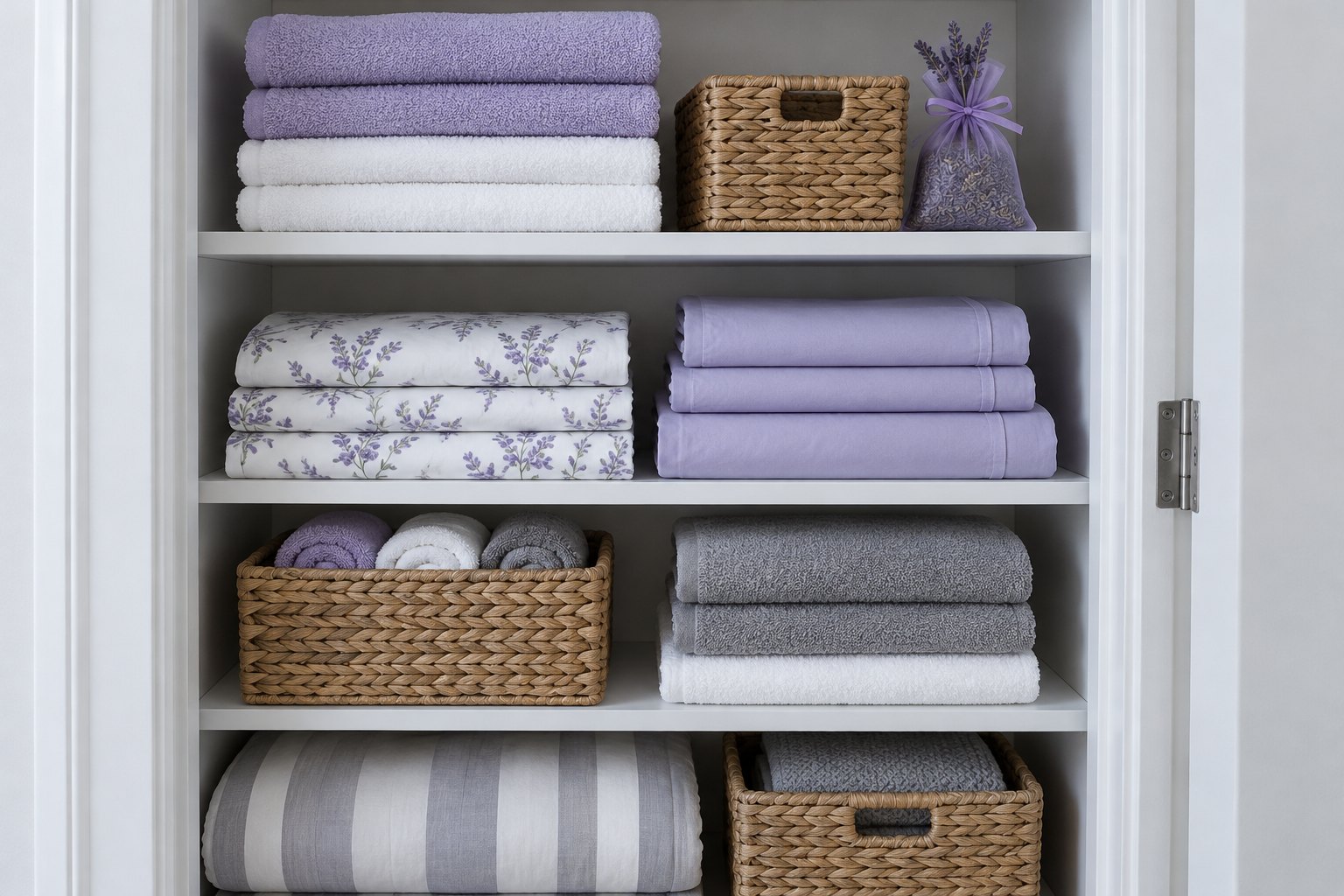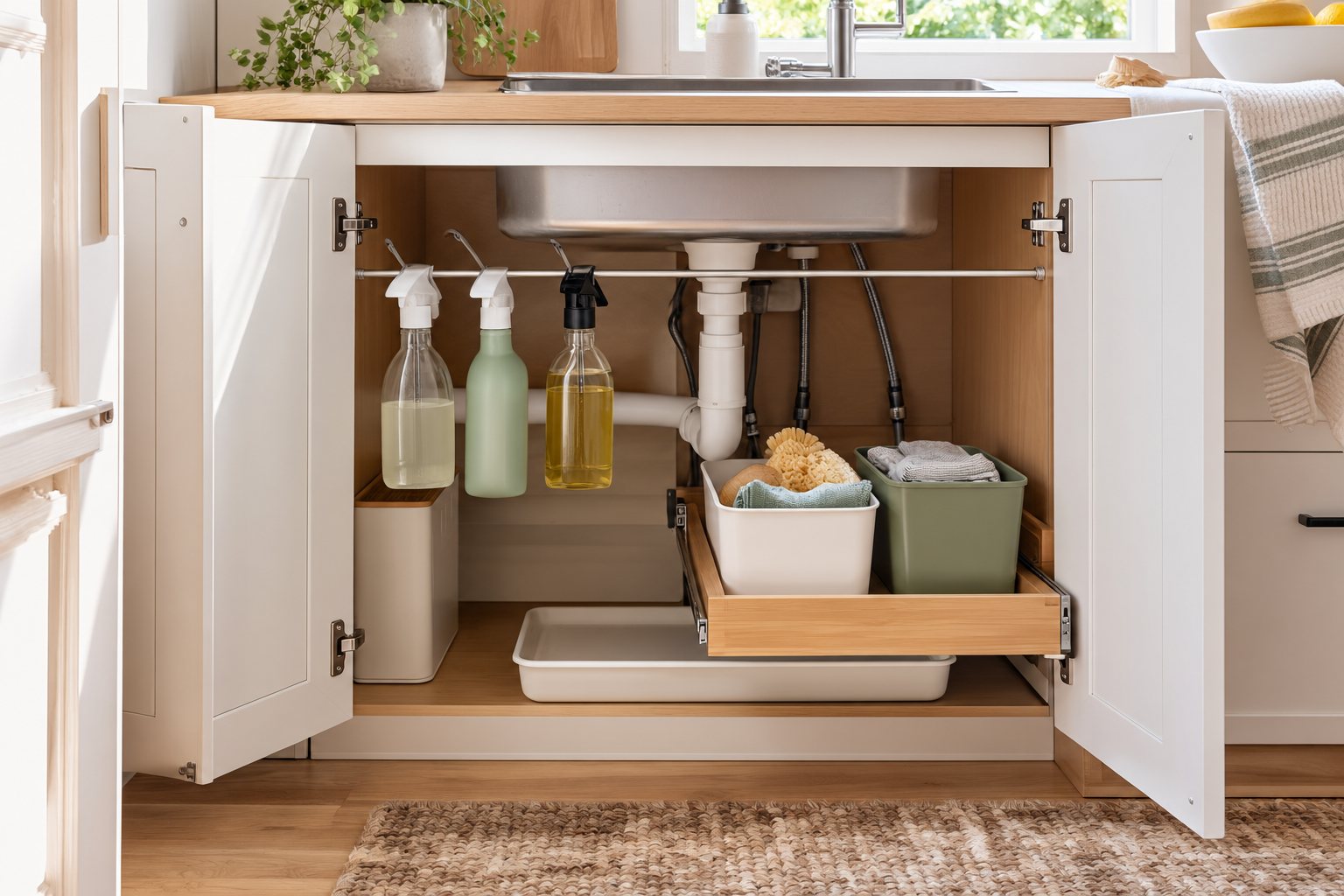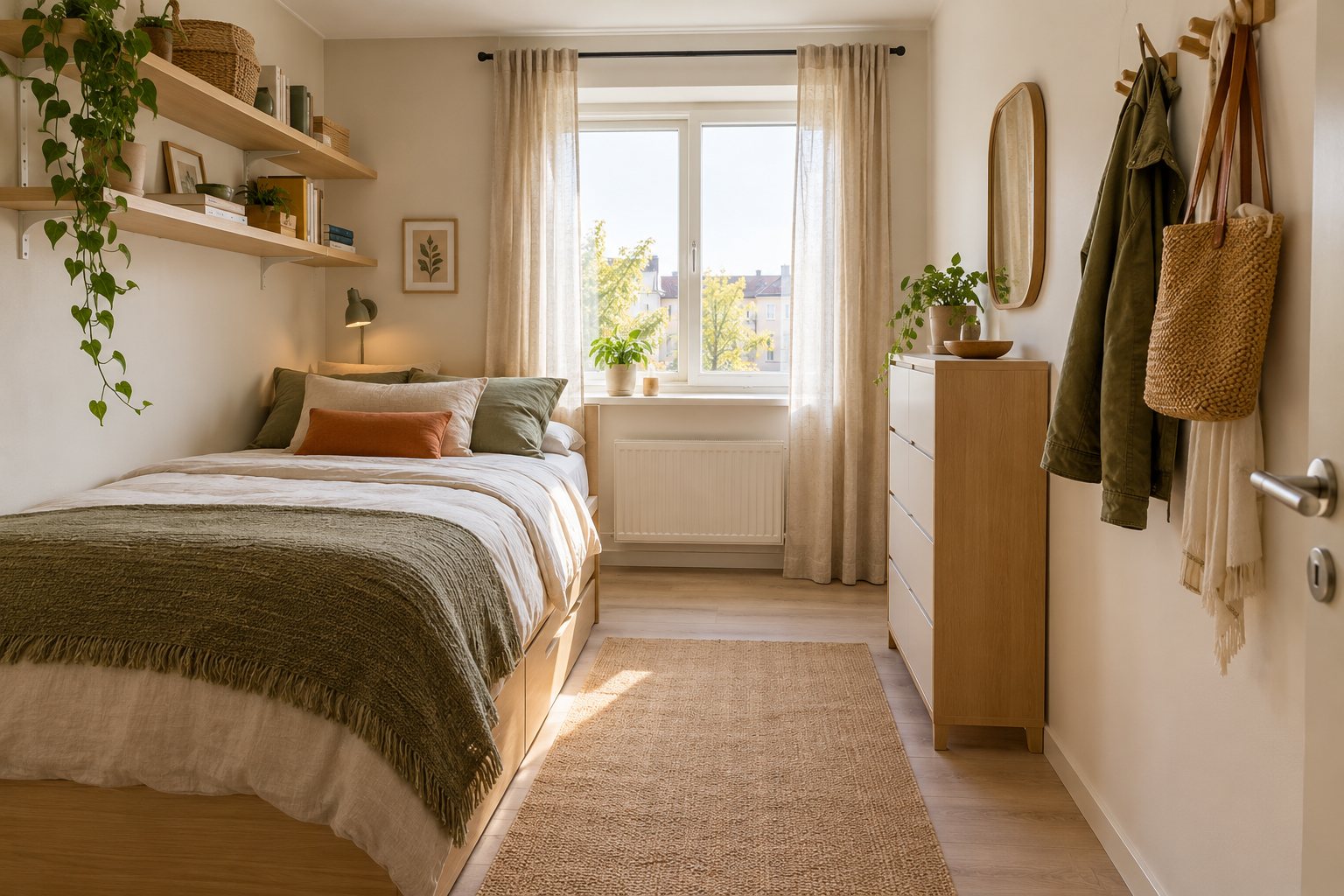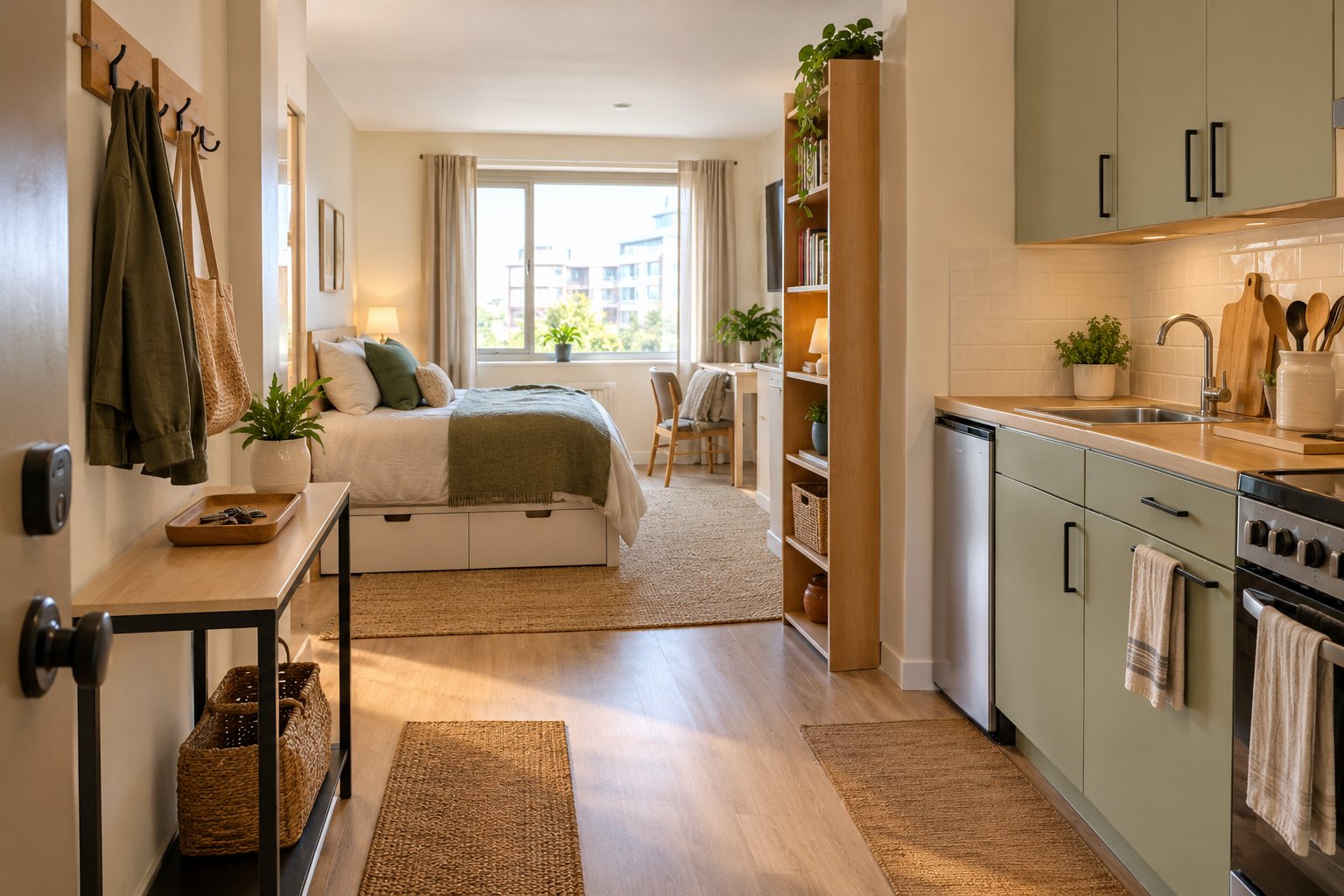
In a small apartment, storage that is a few inches too big does more than look awkward. It narrows the path you walk every day. The fix is to decide where things live before deciding what to buy.
This guide uses three ideas: zones, reach height and a reserve limit. You need a tape measure, paper and an afternoon.
Step 1: Map the Apartment by Zone
Think by activity instead of by room: entry, kitchen, sleeping, living and bathroom. Draw the apartment on paper and mark each zone and the walking path between them. Every item you own gets one zone, and a place inside it.
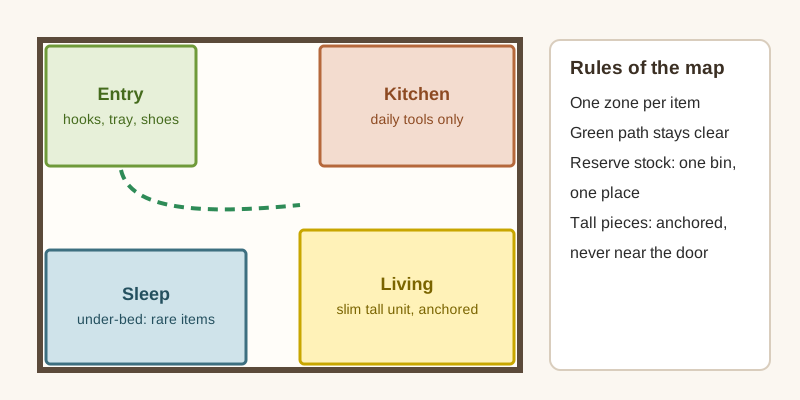
If an item has no obvious zone, ask where you first reach for it. That is its zone.
Step 2: Measure Before You Buy
Measure the wall space, the door swing and the path to the spot, including hallways and stairs. A piece that fits the spot but cannot get through the door is a common and expensive mistake. Mark the footprint with tape and walk around it for a day. Also note the height of radiators, window sills and ceiling slopes, and keep a photo of each measurement with the tape visible so you can check it in the shop. A piece that clears the wall but covers a heater or blocks a window handle is the wrong piece, however well it fits.
Step 3: Put Daily Items at Reach Height
Sort what you own by how often you reach for it. Daily items go between knee and shoulder height, weekly items lower, and rare items high or under the bed. Heavy items stay low. Improve access before adding capacity, because a deep shelf where you must move five things to reach the back is storage in name only.
Step 4: Use Vertical Space Safely
Walls are the most underused storage in a small apartment, but tall storage carries two risks: falling furniture and overloaded shelves. Anchor tall furniture to the wall, as the U.S. Consumer Product Safety Commission recommends for dressers, bookcases and TVs. Use hardware rated for your wall and the load, and follow the maker’s instructions.
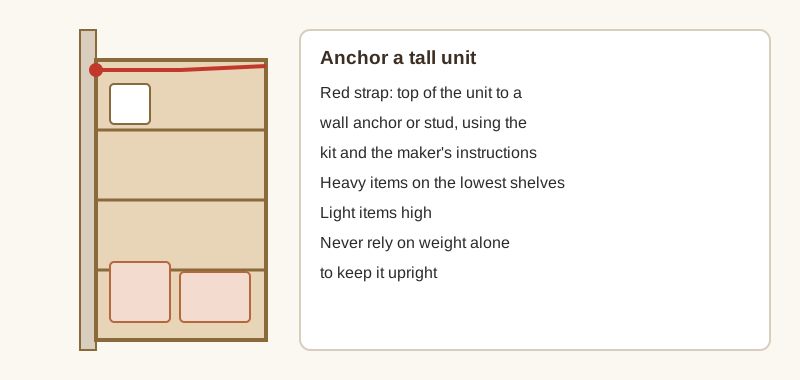
Anchor kits differ by wall type, so use the one made for yours and the manufacturer’s instructions. Renters who cannot drill can choose a lower, wider unit that is less likely to tip, and ask the landlord about wall anchors.
Step 5: Let Furniture Do Double Duty, Within Reason
Furniture with storage helps when it replaces something you already need, such as an ottoman or a bed with drawers. It does not help when it adds one more object. Under-bed space works for items you need a few times a year. Measure the clearance first, and keep daily items out of it.
Step 6: Set a Reserve Limit
Backup stock is what quietly takes over a small apartment: spare toiletries, cleaning supplies, duplicate tools. Give reserve items one defined home, one labeled bin per category.
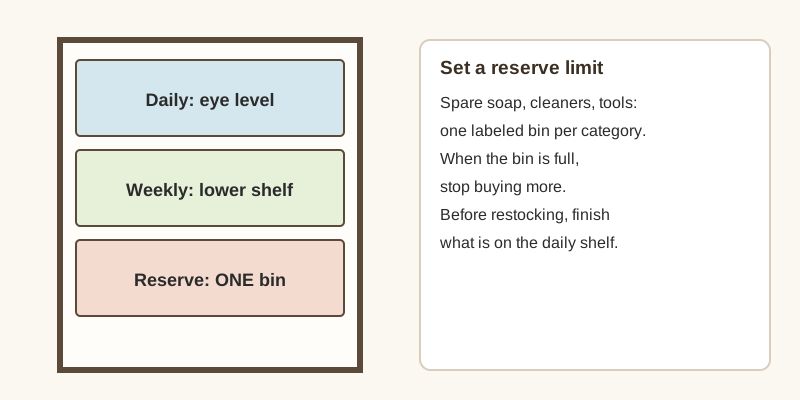
When the bin is full, stop buying more until you finish something. This single rule prevents most overflow.
Step 7: Make the Entry and Closets Work Harder
Coats, bags, shoes and mail arrive at the entry first, so a narrow shelf, a row of hooks and a tray decide whether the rest of the apartment stays tidy. In closets, use the door, the gap above the rod and the floor, with limits for each.
Step 8: Choose Rental-Friendly Options First
If you rent, start with options that leave no marks: freestanding units, tension rods, over-door hooks and removable adhesive hooks within their rated load. Save drilling for pieces that truly need it, and ask your landlord first.
A Sensible Order for One Weekend
Work in this order so that nothing has to be done twice. On Saturday morning, sort by zone and remove duplicates and expired items. In the afternoon, measure and mark the walking path, and decide which tall pieces stay. On Sunday, install anchors and rails first, then place bins and labels, and only then buy whatever is still missing, from a written list. If you buy storage first, you will end up choosing around the things you already own instead of around the space.
Safety Details
- Keep alarms and exits clear. NFPA guidance recommends smoke alarms inside each bedroom and outside each sleeping area, so do not cover them with shelves or tall storage.
- Keep the path clear. The route from bed and living area to the door should stay open.
- Check weight limits. Do not put heavy items high, and do not exceed the rating of shelves or hooks.
Mistakes That Make a Small Apartment Feel Smaller
- Buying a sofa or shelf that fits the spot but not the stairwell or the door.
- Covering several surfaces with decorative storage boxes that nobody opens.
- Giving the same item two homes in two zones, so it is never in either.
- Keeping spare supplies in every cupboard instead of one reserve shelf.
- Pushing furniture against a window or smoke alarm to gain floor space.
When Every Zone Is Full
If every zone is full and the path is still blocked, the apartment holds more than it can carry. Remove duplicates first, then reduce categories. Storage can organize what you own, but it cannot solve a surplus.
Try This Tonight
Pick the zone that bothers you most. Take out everything that does not belong there and carry it to its own zone. Then walk the green path from the door to the bed. If it is clear, the map is working.
Frequently Asked Questions
How do you organize storage in a small apartment?
Divide it into zones, give every item one home, keep daily items at reach height and cap backup stock at one bin per category.
What is a reserve limit?
A fixed place and size for spare supplies. When the bin is full, you stop buying until you use some.
Is tall storage safe in a small apartment?
Yes, if it is anchored to the wall and not top-heavy.
What can renters use instead of drilling?
Freestanding units, over-door hooks, tension rods and removable adhesive hooks within their rated load.
Should I avoid blocking windows and doors?
Yes. Keep exits, windows and smoke alarms clear.
Sources
- U.S. Consumer Product Safety Commission, Anchor It! campaign marks 10 years : anchoring TVs and furniture such as bookcases and dressers to the wall
- International Association of Fire Chiefs, Smart choices in smoke alarm placement : NFPA guidance on smoke alarms inside each bedroom and outside each sleeping area
Related Guides
- Narrow Entryway Organization
- Small Bedroom Organization: A Floor-First Plan
- Small Kitchen Organization Ideas
The diagrams and the cover in this guide are original illustrations drawn for this article. Measurements are examples; measure your own space.