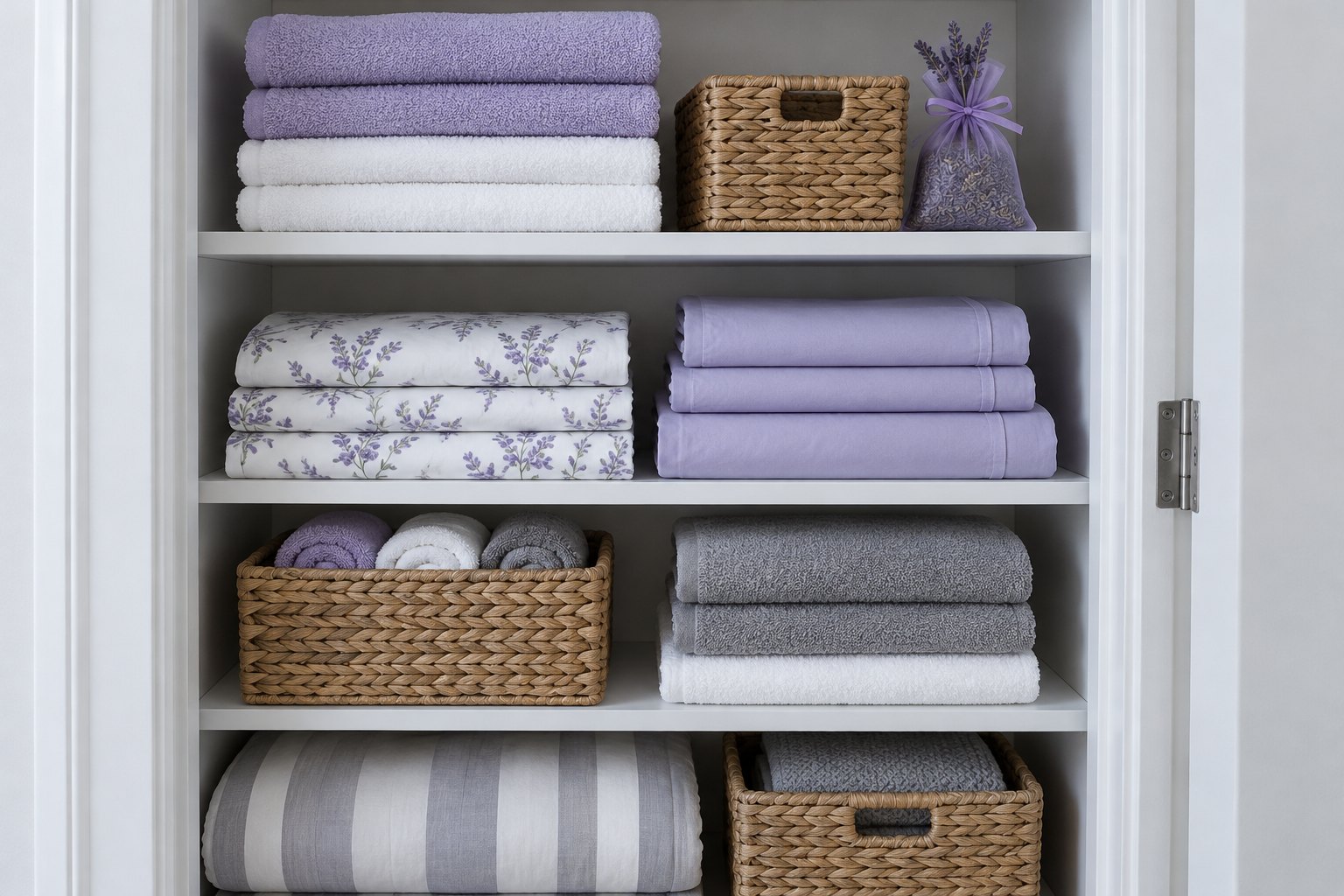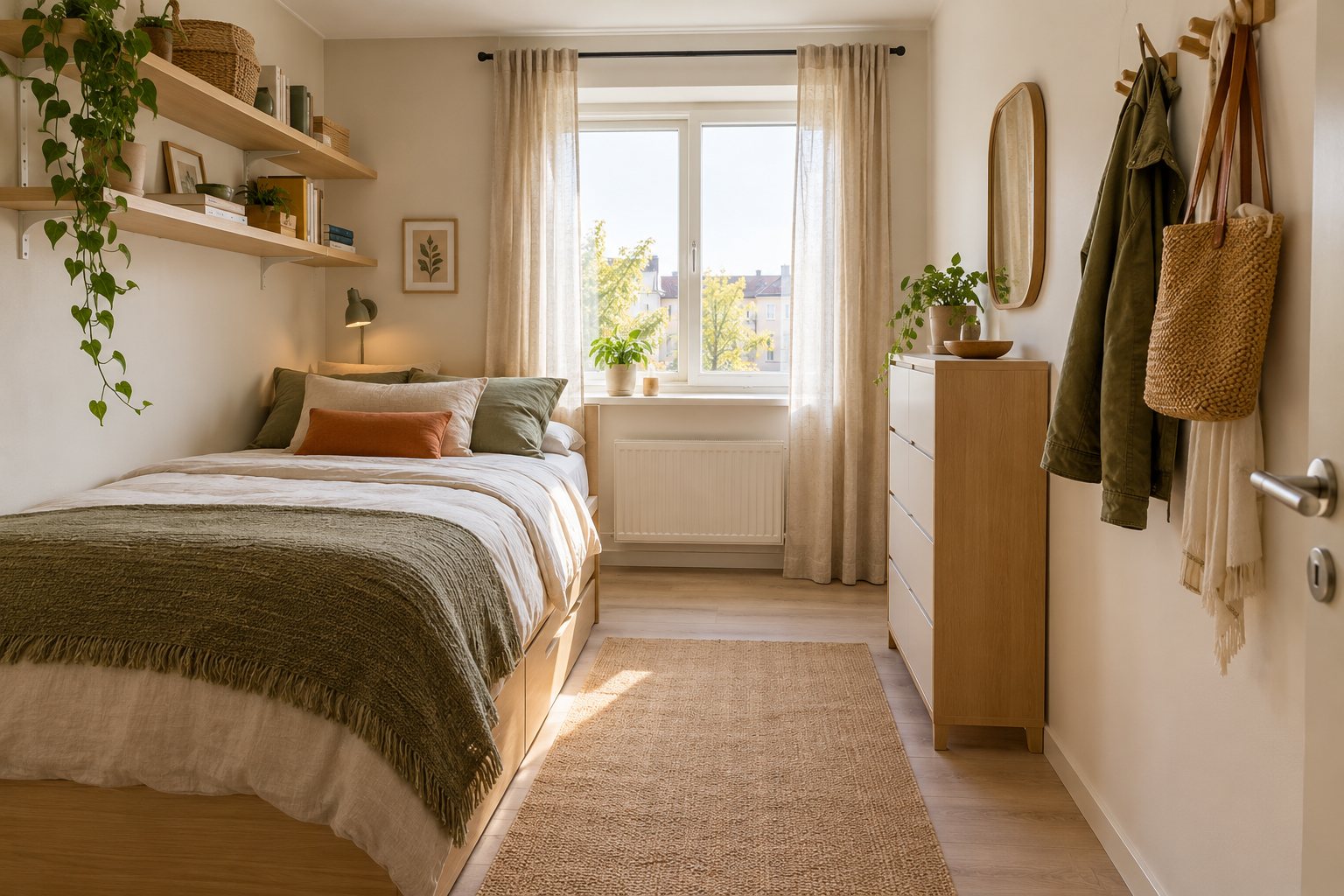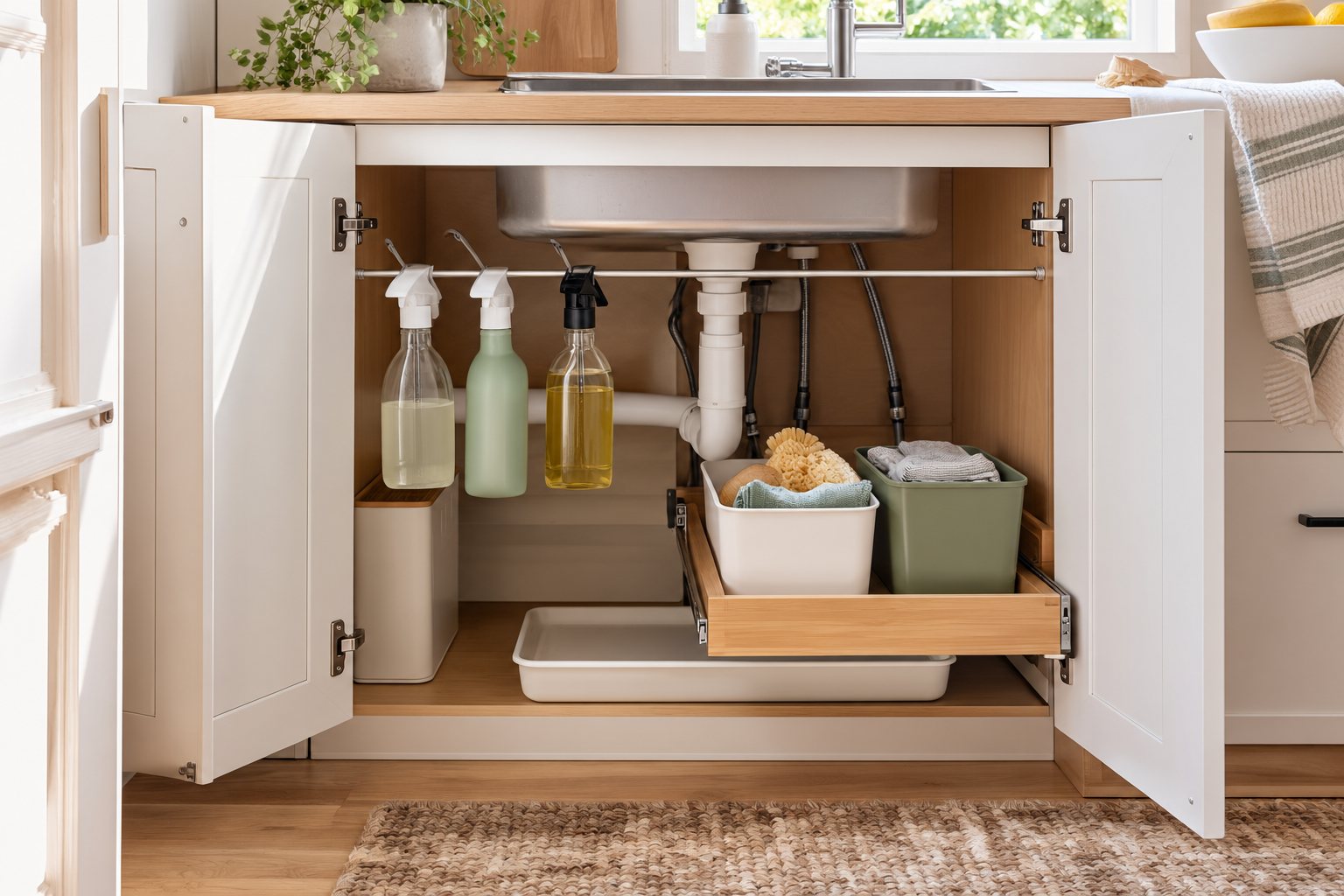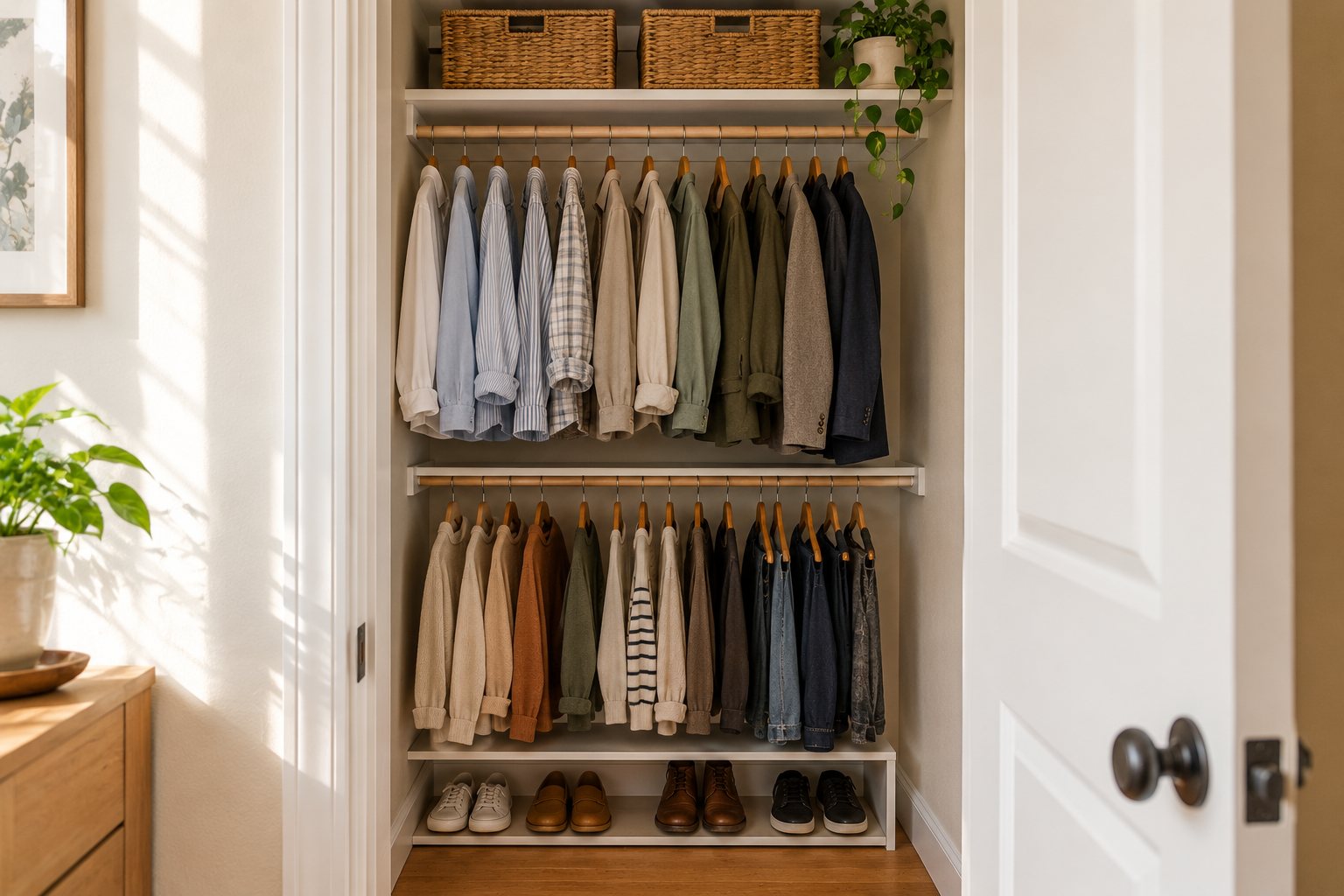
A small closet usually fails in one of three ways: a rod at the wrong height, shelves too deep to reach, or a floor buried in shoes. Fixing them starts with numbers, not with products.
You need a tape measure, paper, and about 40 minutes. Do not buy anything until you finish Step 3.
Step 1: Take Five Measurements
Write down the inside width (A), the height from floor to ceiling or top shelf (B), the current rod height (C), the shelf depth (D), and the clearance your door allows for bins and organizers (E).
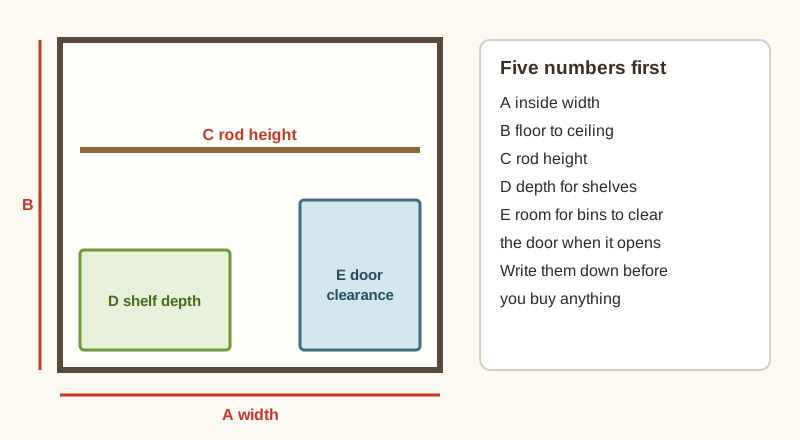
Most closet mistakes happen before purchase: a bin an inch too deep to clear the door, a rod too low for a long coat, or a shelf too deep to see the back.
Step 2: Decide What Belongs in the Closet
Organizers do not create space. They only arrange what is already there. Take everything out and sort it into three piles: keep here, keep elsewhere, and let go. Seasonal items, formal wear worn once a year and spare bedding are good candidates for another place, such as under the bed.
Step 3: Match the Rod to What You Hang
Measure your longest garment and your shortest group. Short garments such as shirts and folded-length jackets can share a section with two rods, if the space below the upper rod still lets the lower items hang clear. Long coats and dresses need one full-height section.
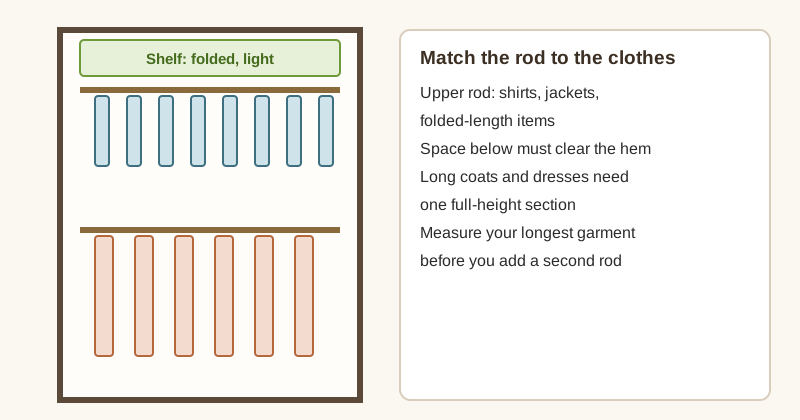
If you are unsure, hang a few items and measure how far they drop. A second rod is only worth adding when every garment on it clears the floor or the rod below.
Step 4: Use Shelves for Folded Items, With Limits
Choose which items to fold by how they behave: knits and jeans fold well, while silk and structured jackets belong on hangers. Knitwear stretches on hangers, and folded T-shirts and jeans take less room folded than hung. Shelves work well for folded clothes, but set a limit for each stack so the bottom items stay reachable. If a shelf is too deep to see the back, use a bin you can slide forward rather than stacking things in layers.
Step 5: Give Shoes a Defined Zone
Shoes are bulky and constantly moving, so give them a defined zone and a number. Measure your longest shoe and the shelf or rack, and keep only as many pairs as fit. Pairs you rarely wear can live in a box on a high shelf. Over-door organizers help only if the door still closes fully and the pockets are not heavier than the door can bear.
Step 6: Use the Door, the Walls and the Gap Above the Rod
The back of the door can hold hooks, a narrow rack or a pocket organizer, as long as the door closes.
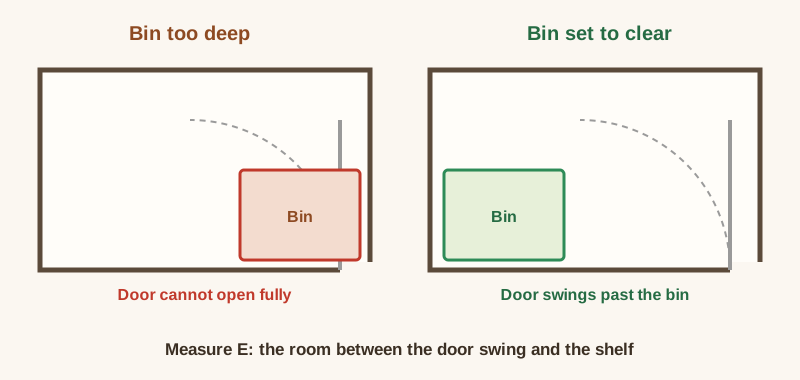
Check this with measurement E: open the door fully, then slide a box of the same size as your bin into place. If the door still swings freely, the bin fits. If it scrapes, choose a shallower bin or move it to a shelf away from the door. Adhesive hooks suit light items and need a clean, compatible surface, so follow the instructions on the package and test with a light load first. The gap above the rod holds light, rarely used items such as spare blankets in a bin, never heavy things.
Step 7: Solve the Hard Closets
- Shallow closets: use slim hangers, shelves sized for folded items, and consider moving bulky coats to a hall hook or a coat stand.
- Narrow closets: go vertical with a shelf above the rod and a low shoe zone.
- Sloped or under-stair closets: keep the low side for bins and the tall side for hanging.
- No closet at all: a freestanding wardrobe or open rail works, and should be anchored to the wall if it is tall or top-heavy.
Cheap Tests Before You Buy Anything
Cut a piece of cardboard to the depth and width of the shelf you are considering and slide it into place. Stack your real folded clothes on it for a day and see whether you can lift the bottom item without disturbing the pile. Hang three of your longest garments on a temporary rod, such as a broom handle across two chairs, and see where the hems land. Tape the outline of a shoe rack on the floor and check whether the door still shuts. These tests take ten minutes each and prevent most returns.
Mistakes That Waste a Small Closet
- Hanging coats on a lower rod that sits under a shelf, so sleeves drag and the shelf above is unreachable.
- Stacking sweaters higher than you can lift without toppling the pile.
- Using the floor for bags and boxes that you have not opened in a year.
- Buying matching hangers before counting how many garments you will actually hang.
- Placing a tall freestanding unit in a home with children without a wall anchor.
If the Rod Is Still Packed
When the rod is packed after sorting, the layout is not the problem. Hang what you wore this month, bag the rest, and revisit the bag after two weeks. Whatever you did not open goes to donation or to another room. A closet with some free hanger space is easier to keep tidy than one packed to the edges.
Try This Tonight
Write A to E on a piece of paper and tape it inside the door. Then take one hanging section out, put back only what you reach for, and see what the closet looks like.
Frequently Asked Questions
How do I organize a very small closet?
Measure the interior, divide it into hanging, folded, shoe and accessory zones, and reserve the easiest locations for daily items.
Should I add a second rod?
Only if your longest garment in that section clears it. Measure first.
Do hanging organizers and bins fit every closet?
No. Check shelf depth and door clearance first, and make sure bins slide out without hitting the frame.
How many clothes should a small closet hold?
Leave about a hand’s width between hangers so you can return items easily. A packed rod means something has to leave.
Do I need to anchor freestanding closet units?
Yes, tall freestanding units should be anchored to the wall, as the U.S. Consumer Product Safety Commission advises.
Sources
- U.S. Consumer Product Safety Commission, Anchor It! campaign marks 10 years : anchoring TVs and furniture such as bookcases and dressers to the wall
Related Guides
- Small Bedroom Organization: A Floor-First Plan
- Renter-Friendly Closet Organization With Adhesive Hooks
- Linen Closet Organization Ideas
The diagrams and the cover in this guide are original illustrations drawn for this article. Measurements are examples; measure your own space.