In a small apartment the trash can is usually the thing that ends up in the middle of the floor. Recycling goes into a shopping bag by the door, food scraps go into the bin with everything else, and the kitchen smells like all three by Thursday.
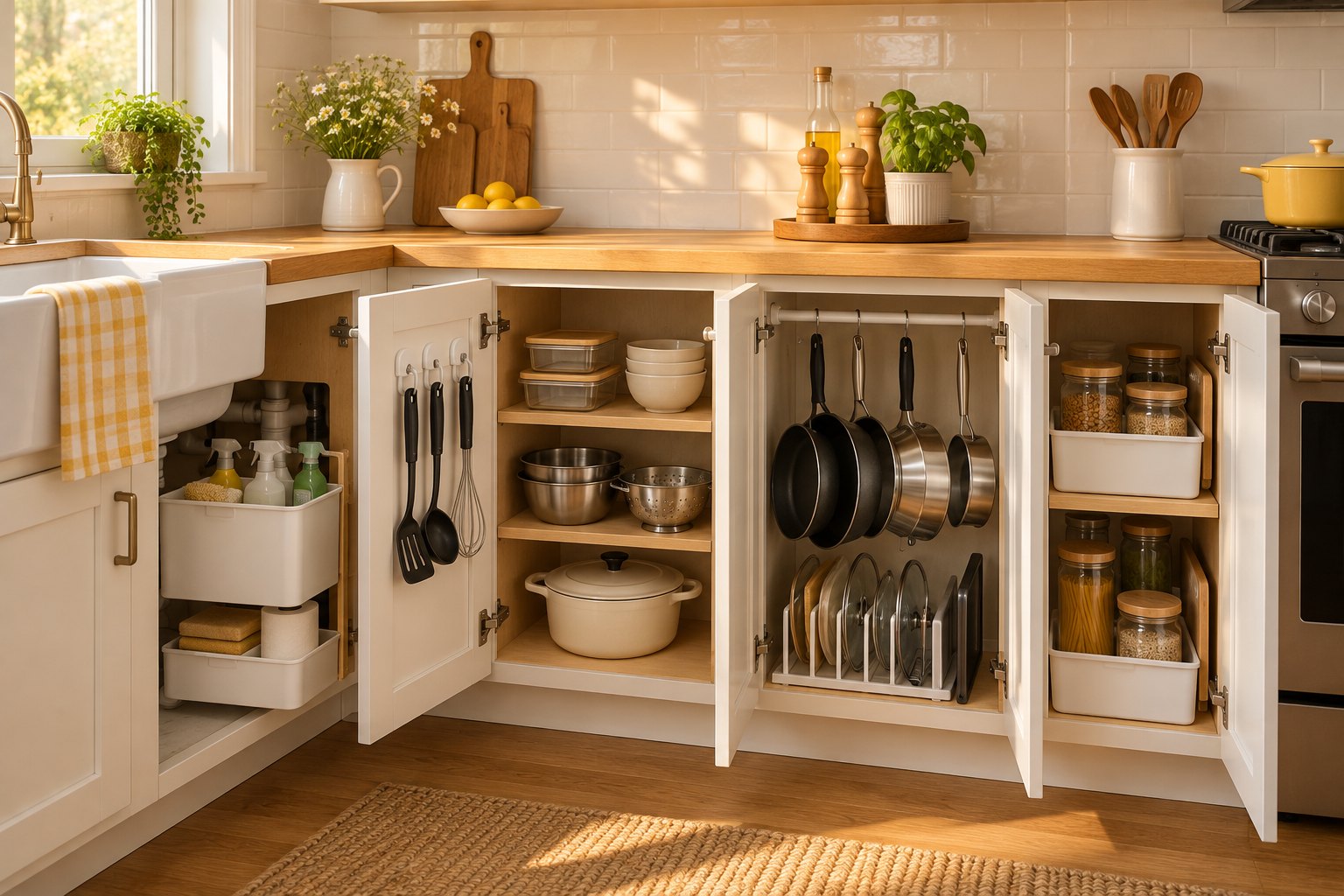
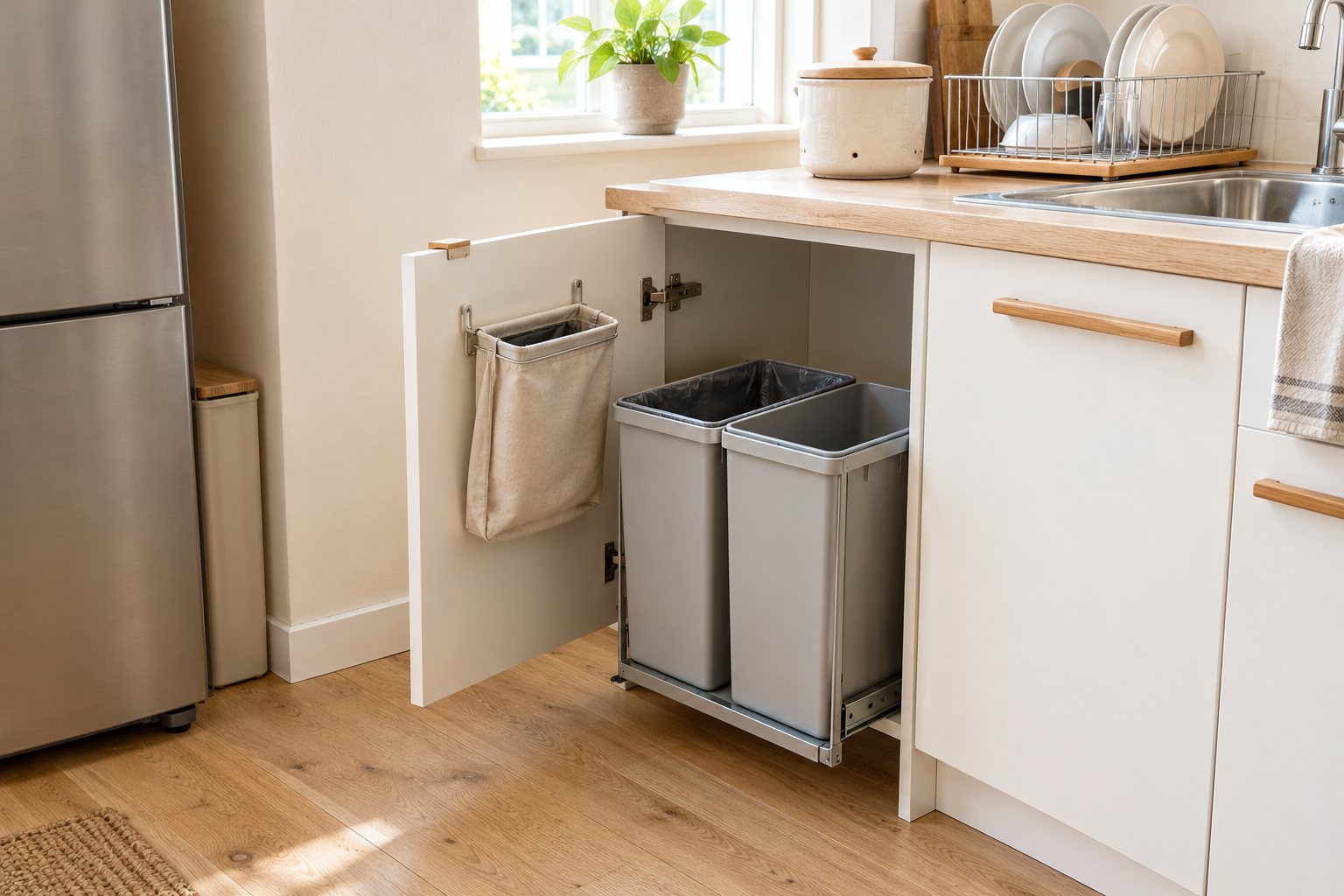
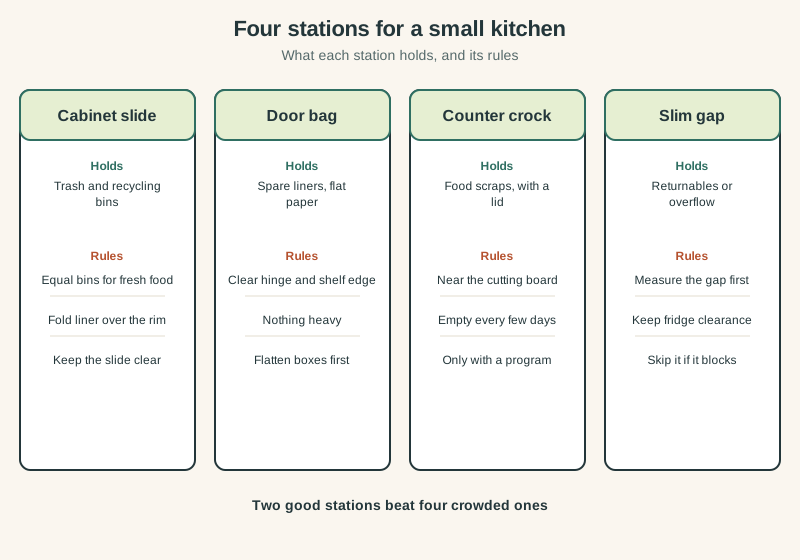
This guide builds a compact system around the layout in the cover photo: two bins on a slide inside a lower cabinet, a bag holder on the cabinet door, a lidded crock on the counter and a slim container in the gap beside the refrigerator. The cabinet comes first because it is the one place that already exists. If your under-sink cabinet is the candidate, read Under-Sink Organization Ideas: A Measured, Leak-Aware System before you move anything in.
1. Measure the Cabinet Before You Buy Anything
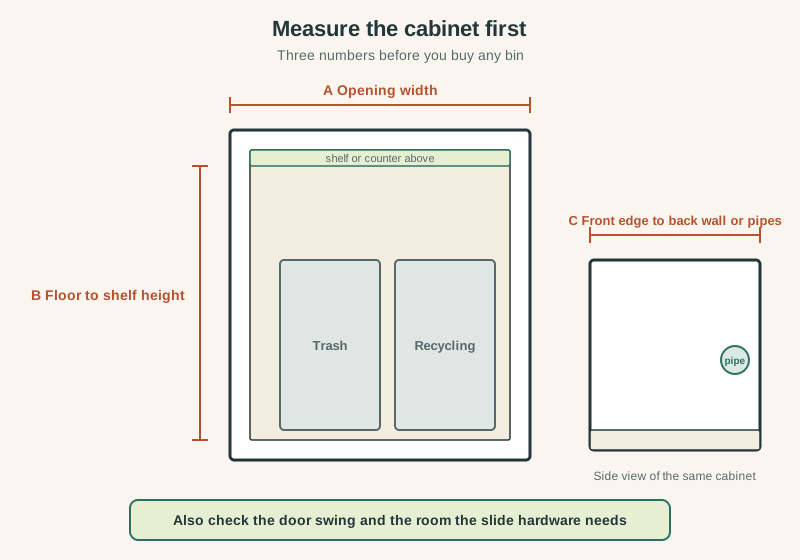
Open the lower cabinet you want to use and take three measurements: the width of the opening between the frame edges, the height from the cabinet floor to the shelf or counter above, and the depth from the front edge to the back wall or the first pipe. Write them down, then check the door: some doors swing into the slide hardware or hit a bin that sticks out.
Bring those numbers to the store or the product page. Many two-bin units list the opening width they need, and the bins inside are narrower than the frame that carries them. If a unit needs screws and you rent, choose a freestanding two-bin that stands on the cabinet floor, and test how smoothly it slides before you load it. A cabinet that is almost big enough becomes a daily annoyance, so keep a margin.
2. Decide How Many Streams You Really Need
Most small kitchens deal with three streams: trash, recycling and food scraps. A fourth, items that need special handling such as batteries, is dealt with outside the kitchen and covered below. Recycling is run locally, so rules differ by city and building. EPA advises checking what your community program accepts before you put an item in the bin, and Republic Services advises contacting your local recycling provider or solid waste authority.
Call your landlord or look up your city’s page before buying bins. If there is no building recycling, you may need only a collection bin and a trip to a drop-off point, and that changes how large the recycling bin has to be. Food scraps need a plan too, but only if a collection program or a drop-off is nearby; otherwise they stay in the trash stream.
3. The Cabinet-First Setup: Two Bins on a Slide
The cover photo shows the core idea: two bins side by side on a slide, one for trash and one for recycling, behind a closed door. Nothing stands on the floor, and opening the cabinet pulls both bins into reach at once. Choose bins of equal size if you cook a lot of fresh food, because trash fills faster than you expect. If you buy mostly packaged food, make the recycling bin the larger one.
Use liners that fit the bins and fold the top edge over the rim so the bag does not slip. Mark which bin is which with a small tag inside the cabinet door, since two gray bins look identical at 7 a.m. Keep the slide clear: do not store spare bags under or in front of the bins, where they jam the hardware.
4. Use the Cabinet Door for a Bag Holder
The photo hangs a fabric bag holder on the inside of the neighboring cabinet door. It turns dead door space into storage for things that are bulky but light: spare liners, or flat paper and flattened cardboard waiting for the next trip out. EPA advises flattening boxes before placing them in the bin, and a flat stack takes far less room than a loose pile.
Check the door first. A holder with hooks must clear the shelf edge and the hinge when the door closes, so close the door slowly with the holder empty before you load it. Do not hang anything heavy on the door; a stack of newspapers is too much for light hardware.
5. A Counter Crock for Food Scraps
Food scraps are the wettest, smelliest part of kitchen waste, so they deserve their own small container with a lid. A lidded ceramic crock like the one in the photo sits on the counter within reach of the cutting board and is emptied into a collection bag or a drop-off container every few days.
EPA says that if you do not have space to compost, you can consider a local municipal or community composting program, which may collect your scraps or offer a drop-off location. EPA also notes that electric food-scrap appliances do not make compost; they produce a dried food scraps mixture that can be added to a composting system. Find out what your local program accepts before you start, because accepted items differ. If there is no program, skip the crock and keep scraps in the trash bin; a half-full crock with nowhere to go is worse than none.
6. The Slim Gap Beside the Fridge
The tall slim container in the photo stands in a narrow gap between the refrigerator and the wall. It suits things that arrive in numbers: returnable bottles and cans where your area has a deposit scheme, or a week of paper bags. Measure the gap first and keep the clearance listed in the refrigerator manual, since a refrigerator needs air to work.
If you have no such gap, skip this station. Do not squeeze a container into a space that blocks the door or the vents just to complete the set.
7. Keep Recycling Clean Enough: The Spatula Rule
Recycling only works if the items are clean enough. EPA says containers contaminated with food cannot be recycled, and that a container scraped or rinsed until it is spatula-clean is clean enough. Waste Management makes the same point: containers do not need to be squeaky clean, but they should be empty and free of food. Republic Services describes the habit as empty, clean and dry, using only a small amount of water to rinse.
Keep a small scraper or an old spatula by the sink and use it as you empty a jar or tub. This also saves water. The reason it matters is contamination: Republic Services explains that a contaminated item can touch paper or cardboard and spoil the whole batch. Waste Management’s guide adds that it is better to put a doubtful item in the trash than to risk contaminating other recyclables.
8. Flatten and Stack, Do Not Pile
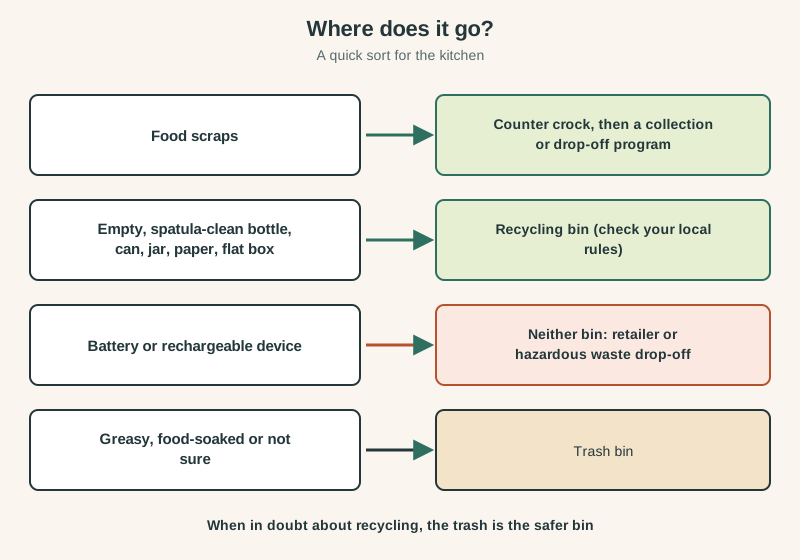
Loose boxes and tubs fill a bin with air. Flatten cartons and boxes, nest tubs where they fit and keep the bin from becoming a heap. A simple test is the cabinet door: if it will not close easily, flatten more or carry the recycling out sooner. The diagram below gives a quick sort for the rest.
9. Batteries and Electronics Never Go in Either Bin
Some items are neither trash nor recycling. Waste Management’s guide says batteries should never be placed in recycling or trash containers, and EPA says rechargeable products that contain lithium-ion batteries, from toys and headphones to power tools, should not go in the trash or municipal recycling bins.
Keep a small box for dead batteries and old chargers in a closet rather than under the sink, and take it to a drop-off when it fills. Retailers and household hazardous waste sites are the usual collection points, so ask your city which one it uses.
10. Odor and Pests Without Extra Space
A cabinet bin is closed, which helps with smell, but it can also hide problems. Take food scraps out before they sit for days, keep the crock lid on and wipe the inside of the cabinet whenever you change a liner. Rinse recyclables lightly so there is nothing left for pests to find.
Once a month, pull the bins out, wash them and let them dry before putting in a new liner. If the cabinet shares a wall with the sink, check the area for dampness at the same time, as described in our under-sink guide.
11. A Weekly Rhythm That Takes Ten Minutes
- Daily: scrape containers as you empty them and wipe the counter around the crock.
- Every two to three days: empty the crock, and the trash bin if it holds food waste.
- Weekly: flatten what is in the door bag, carry out the recycling and check the liners.
- Monthly: wash both bins and wipe the cabinet floor.
If one of these tasks keeps slipping, the setup is too far from where you work. Move the station, not your habits.
12. Common Mistakes in a Small Kitchen
- Buying a pull-out before measuring the door swing and the pipes.
- Putting the crock far from the cutting board, so scraps end up in the bin anyway.
- Mixing food scraps and recyclables in the same bin.
- Hanging a heavy bag on a light cabinet door.
- Putting greasy or food-soaked containers in recycling just in case.
13. Try This Weekend
- Measure the cabinet opening, height and depth, and check the door swing.
- Ask your landlord or city what recycling and food scrap options exist.
- Install one two-bin unit, and hang a door bag only if the door clears it.
- Add a lidded crock if you have a program, and start the spatula habit at the sink.
Frequently Asked Questions
Where can I put a recycling bin in a tiny apartment?
Inside a lower cabinet, on a slide next to the trash bin, with a bag holder on the door for flat paper and cardboard. Measure the opening, the depth and the door swing before you buy.
Do I need to wash containers before recycling?
They need to be empty and free of food, not spotless. EPA says spatula-clean is clean enough, and containers contaminated with food cannot be recycled.
What can I do with food scraps without a yard?
Collect them in a lidded countertop container and use a municipal or community composting program that collects scraps or has a drop-off location. EPA notes that electric food-scrap appliances produce a dried mixture, not compost.
Can I put batteries in the trash or recycling?
No. Waste Management advises never placing batteries in recycling or trash containers, and EPA says rechargeable products with lithium-ion batteries should not go in the trash or municipal recycling bins. Use a retailer or household hazardous waste drop-off.
How often should I empty a small kitchen trash bin?
Often enough that the lid closes and food waste does not sit for days. Many people empty a small bin every two to three days, and sooner in hot weather.
What if my building has no recycling?
Recycling is run locally, so ask your landlord or your city’s solid waste office. EPA advises checking what your community program accepts, and a drop-off point is often the fallback.
Sources
- US Environmental Protection Agency, Composting At Home .
- US Environmental Protection Agency, How Do I Recycle Common Recyclables? .
- Republic Services, This America Recycles Day, Remember to Practice Empty, Clean and Dry (archived copy) .
- Waste Management, Curbside Residential Recycling Myths (PDF) .
Related Guides
- Under-Sink Organization Ideas: A Measured, Leak-Aware System
- Kitchen Storage Without a Pantry: Pull-Out Cabinet or Slim Shelves for Dry Goods
- Laundry Without a Laundry Room: A Drying, Sorting and Folding Station for a Small Apartment
Image Credits
The cover image is an AI-generated image via ChatGPT, October 2026. The three diagrams are original graphics created for this guide.